
The Founder Has to Knock on the Door
Early-stage outbound is grunt work, and the grunt work is the moat. A field guide for seed-stage B2B SaaS founders who keep looking for the shortcut.
Stijn Hendrikse · May 26, 2026
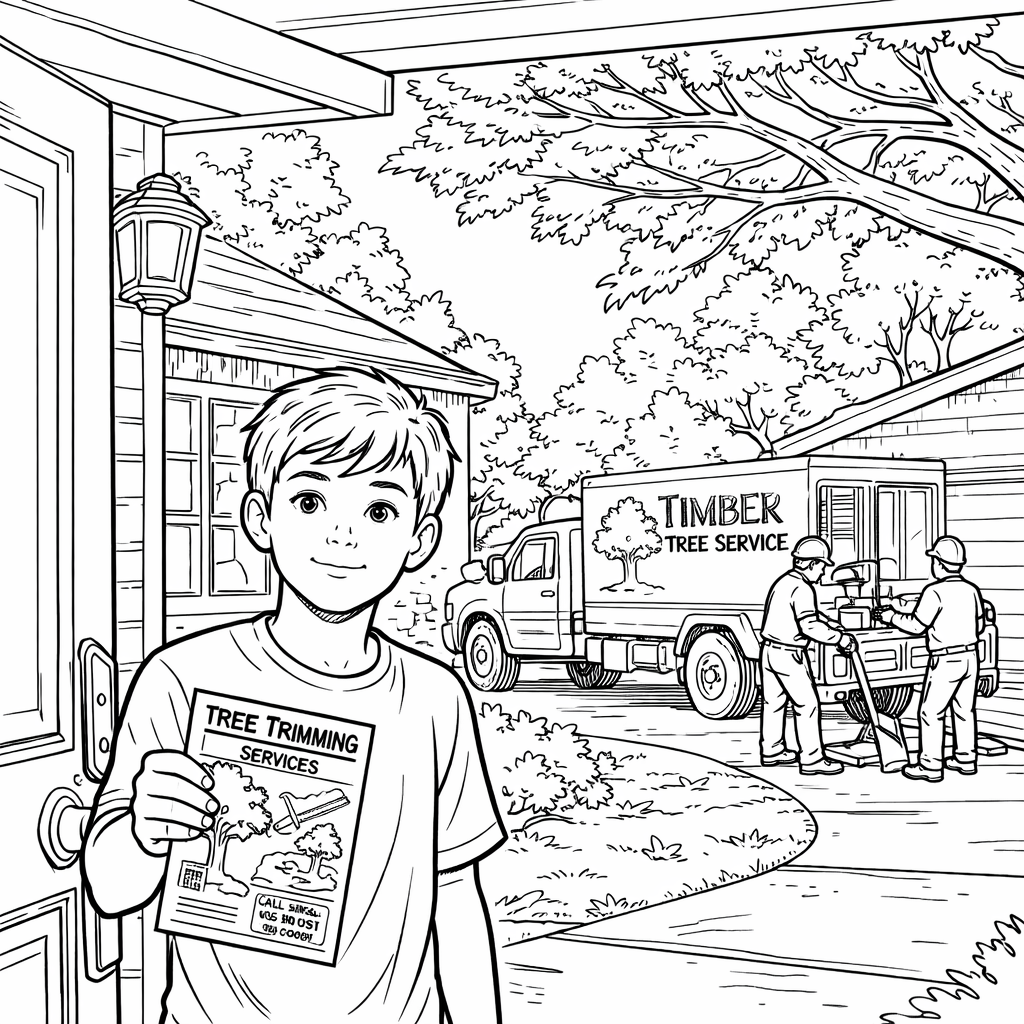
Twenty-five years ago I moved from the Netherlands to Seattle, into a house with more trees in the yard than I had ever seen in one place. One night around eight, a tree-pruning company knocked on our door. My twelve-year-old son opened it, accepted a flyer, and closed the door politely. The flyer sat on our kitchen counter for months. Eventually my wife noticed a branch hanging the wrong way over the garage, picked up the flyer, and called. That company has serviced our trees ever since.
That knock on the door is the most underrated outbound playbook in B2B SaaS.
Early-stage outbound is grunt work, and the grunt work is the moat. The founders who skip it (buy a list, automate the cadence, decide email is dead) end up with no pipeline and no signal. The founders who do it (target who they knock on, time when they knock, leave something worth keeping, come back for the harvest) build a flywheel that compounds for years.
Four disciplines run the play.
- Pick the right doors. The tree-pruning company did not knock on every house on the block. They knocked on the houses with trees hanging over the roof.
- Knock at the right time. They came at eight in the evening, when the door was more likely to open. Not ten in the morning, when nobody is home.
- Leave something worth keeping. The flyer was good enough to not get thrown out. Designed enough, useful enough, not pitchy enough.
- Come back for the harvest. They did not expect a sale at the door. They expected to be the company on the kitchen counter when the branch started to lean.
If that sounds obvious, ask yourself how much of your current outbound passes all four tests.
The argument against this
The objection most founders have is that doing this work feels beneath them. They have a CEO title, a deck, a deck of cards full of investor logos, and an opinion that manual outreach is what you do before you can afford to automate. They are wrong about that. Manual outreach is what you do until you have enough signal to know what to automate. The order matters. Automation amplifies whatever you give it. If you give it a generic message to a poorly built list, it amplifies that. If you give it a sharp message to a carefully built list, it amplifies that. The grunt work is what turns the second case from a wish into a reality.
The other objection is that early-stage outreach feels rude. You are interrupting people who did not ask to hear from you. That instinct is mostly correct and entirely beside the point. If you do not interrupt, the people you need to reach will not know you exist. The job is not to stop interrupting. The job is to interrupt well.
Ninety-five percent of your TAM is not problem-aware
When you are early, you are almost never selling into a market that is shopping for you. The Pain-Claim-Gain frame from T2D3 starts with pain, but pain is something people only recognize after they have words for it. In a new category, or a new approach to an old need, those words do not yet exist for most of the market.
The math is unforgiving. If five percent of your TAM is in-market today, ninety-five percent is not. The five percent will find you through inbound if you have the SEO, the content, the brand. The ninety-five percent will not. They have to be reached. They have to be told. They have to be reminded, more than once, that there is a different way to do the thing they have been doing.
That changes what outbound has to do. It is not a conversion tool at this stage. It is an awareness tool. It is a method for taking someone from “I have never thought about this” to “I have a name for this problem” to “I know who to call when the branch starts to lean.” Most founders give up on outbound after week three because they were measuring it as conversion. Week three of awareness work shows almost nothing. Week thirty of awareness work, done well, shows a pipeline.
In T2D3 I cover the eight-step ABM cadence that fits this stage: a sequence of touches over thirty days, not because thirty days is a magic number, but because most prospects ignore the first three touches, notice the fifth, and respond to the seventh. The founders who quit at touch three are throwing away the work that touches four through seven would have done.
Do not buy the list. Build it.
I have been in B2B marketing for thirty years, and the list mafia is still the most reliable way to waste money in the first year of a startup. Purchased lists arrive with three problems baked in. Half the emails are stale because people change jobs every eighteen months. The other half are the public-facing addresses that go to a receptionist who never tells the founder. And the third half, somehow, is overlap with every other list your competitors bought, which means your message lands in inboxes that have already been desensitized to messages exactly like yours.
Building the list is the work. The work is not exciting. You are pulling profiles from LinkedIn, enriching them with a tool like Clay or LemList, qualifying them against your ICP one by one, and catching them in a database so you do not message the same person twice. This is six to twelve hours of founder time per week for the first quarter. It is also the period when you learn more about your market than any deck you will ever read.
The output of the work is not just a list. It is the answer to questions you did not know you should be asking. What size company actually has this pain? What title actually owns the budget? What industry shows up three times when you expected it once? The list-building process is the cheapest market research available, and the founders who outsource it lose the learning.
The other reason to build the list yourself is deliverability. A bought list, blasted to ten thousand addresses, will torch your domain reputation in a week. A list you built, sent to in batches of fifty after a domain warm-up, will not. The technical hygiene matters as much as the targeting. Tools like LemList’s LemWarm exist precisely so a young domain can build the reputation needed to land in the inbox instead of the spam folder.
Email is not dead. You are.
Every time I tell a founder we are going to use email for outreach, I get the same speech. Nobody reads email. Everybody deletes it. The inbox is full of spam. The speech is wrong, but I understand where it comes from. The founder has been on the receiving end of bad email for fifteen years and assumes everyone is doing it the way it has been done to them.
People do not delete the email you sent. They never see it. The vast majority of failed outbound campaigns fail because the message was filtered, was buried under a day’s worth of inbox, or landed at the wrong time. The rest fail because the message was about the sender instead of the recipient. Of the founders I have coached, almost none of them have ever sent an email cold and gotten zero opens. They have sent emails that got a five percent open rate when they expected fifty, and concluded that email is dead. Five percent of a list of a thousand is fifty opens. Fifty opens of a well-targeted message to a well-built list is exactly the volume an early-stage founder needs to find their first twenty conversations.
The work to make email earn its place is straightforward. Register a separate domain so you do not torch your primary one. Warm it up over two to three weeks. Set up SPF, DKIM, and DMARC so the spam filters trust you. Write subject lines that look like a human wrote them. Write a first sentence that does not start with “I hope this finds you well.” Personalize at least one detail per email, even if you have to use AI to scale that. Then send in small batches and measure what comes back.
That last part is where the founders who stick with it pull away from the founders who quit. Your first batch will tell you which subject lines work, which messages get replies, and which segments respond. Your second batch will be twenty percent better because you used what the first batch taught you. Your tenth batch will be a different operation entirely.
The German CEO story
In 2019 I spammed a German CEO on LinkedIn. He ignored me. Completely. I assumed he had seen the message, decided I was a nuisance, and moved on. Nine months later, his company hit a moment where their marketing needed to be reversed and rebuilt, and that CEO remembered the message I had sent him. He reached out. His company became the largest client Kalungi has ever had.
I was wrong about almost everything in that exchange. I was wrong to assume he had not seen the message. He had. I was wrong to assume that not replying meant not interested. It meant not yet. I was wrong to give up after one touch, except that I did not give up; I had moved on, but the message was still sitting in his memory. The timing of the buy and the timing of the outreach almost never line up in the early stage. Founders who quit before the timeline plays out are quitting on the wrong dataset.
This is the part of the playbook that no spreadsheet captures. The flyer on the kitchen counter does its work over months, not minutes. The cold email does its work the third time the recipient sees your name, not the first. The LinkedIn message does its work in nine months, not nine days. If you cannot run the play long enough to let the timeline play out, you are not running the play.
Discussion items
The founders I coach who get traction on outbound have all done the same five things in the first ninety days. Each one of them feels like a chore, and each one of them is the actual work.
- They built the list themselves, in their own database, with their own enrichment, with their own qualification criteria. They did not buy it. They did not outsource it. They sat with it and learned from it.
- They registered a separate sending domain, warmed it up, and protected their primary email reputation. The technical setup is unglamorous and non-negotiable.
- They wrote the first ten outbound messages by hand, one at a time, to ten real people they wanted to talk to. Then they used what they learned from the responses to write the next fifty.
- They committed to a cadence of at least seven touches over thirty days and did not give up at touch three. They tracked which touch produced which response.
- They treated every reply, including the ignored ones, as data. They did not treat silence as rejection. They treated silence as a timing problem and kept the relationship alive.
Questions to ask
Use these five questions in your next leadership meeting to test whether your current outbound passes the tree-pruning test.
- Who are the houses with trees in our market, and are we knocking only on those? Or are we still blasting whole neighborhoods?
- What time of day, week, or quarter is our prospect most likely to open the door? Have we tested that, or are we sending at the time that is convenient for us?
- If a prospect kept our outbound message on their kitchen counter for three months, what about it would make them keep it? Is the message that useful right now?
- When we stop hearing from a prospect, do we assume they said no, or do we assume the branch has not started to lean yet? Which interpretation does our data actually support?
- How many of our current outbound campaigns would survive a Stephen King filter that cut every word that does not have a job? What would survive?
Sources
- T2D3, Stijn Hendrikse: https://www.t2d3.com/book
- Spending $2 to Make $1, Stijn Hendrikse: https://www.t2d3.com/spending-2-to-make-1
- Pain-Claim-Gain framework: https://www.t2d3.com/blog/pain-claim-gain-framework
- LemList for cold outreach: https://www.lemlist.com
- LemWarm for domain warm-up: https://www.lemwarm.com
- Clay for list enrichment: https://www.clay.com